Content
SHARE
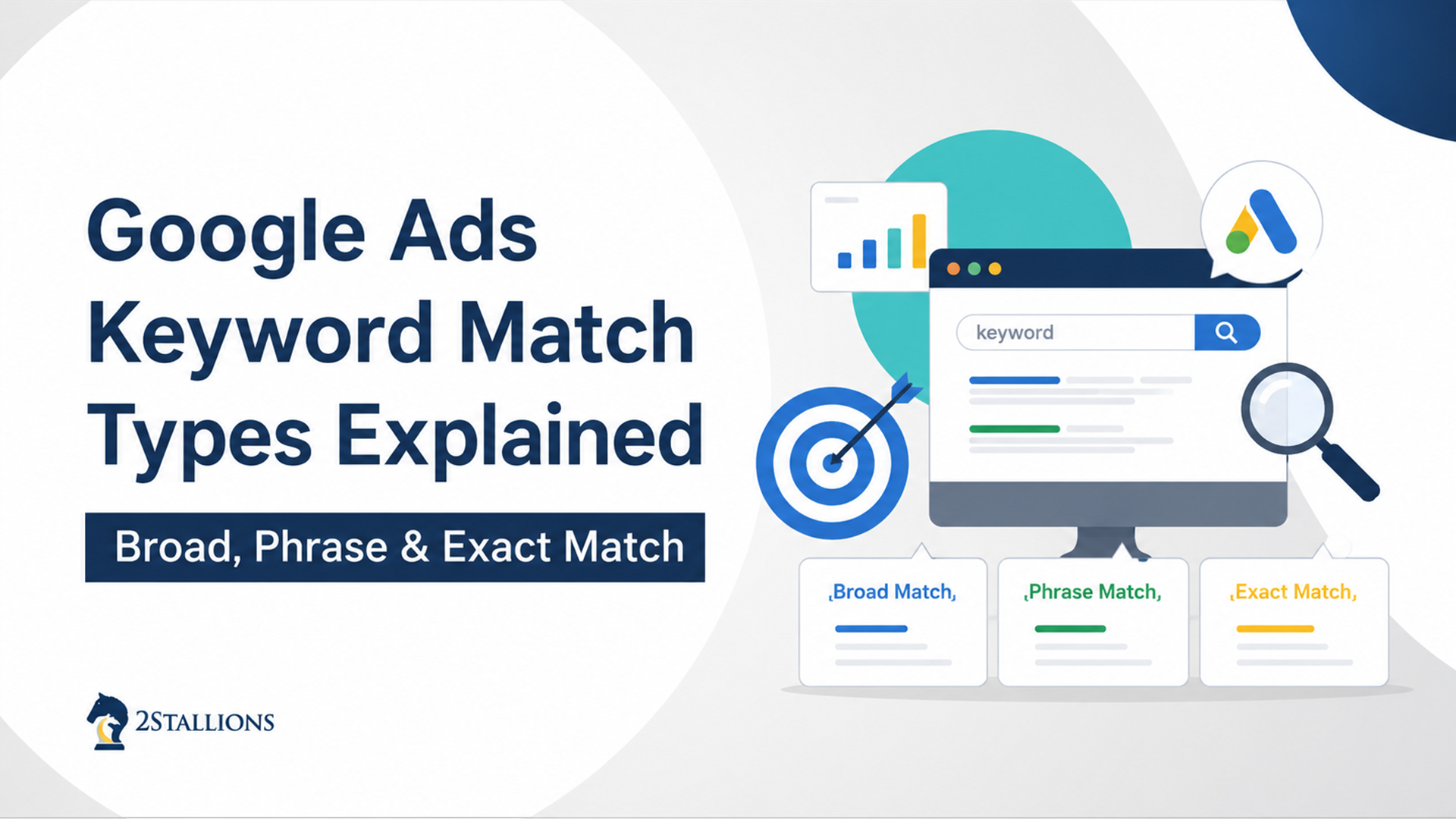
In Google Ads, your keyword list gets you in the game. Your match types (broad, phrase or exact match) determine whether you win or waste your budget.
A business selling corporate catering in Singapore runs a campaign for “catering services.” Without the right match type settings, that same ad could appear for “free catering recipes,” “catering courses,” or “DIY party catering ideas.” Every irrelevant click costs money and returns no enquiries.
Keyword match types are the setting that controls this. They tell Google how broadly or narrowly to interpret your keywords when deciding whether to show your ad. Getting this right is one of the key decisions influencing the success of your Google Ads campaign.
This guide explains how each match type works, how they have changed today, and how to choose the right one for your campaigns.
What Are Keywords & Match Types in Google Ads?

Examples of keywords from Google Ads Keyword Planner
When you add target keywords to a Google Search Ads campaign, you are not just telling Google what to target. You also have the control over telling Google how flexible to be when matching your keyword to a user’s search query.
That flexibility is controlled by your keyword match type.
Google currently offers three match types: broad match, phrase match, and exact match. Each one defines a different threshold for how similar a search query needs to be to your keyword before your ad becomes eligible to appear.
Choose too broad a match type, and your ads appear for searches that have nothing to do with your business. Choose too narrow a match type, and your ads barely appear at all. The goal is to find the setting — or combination of settings — that puts your ads in front of the right searches with the best chance of conversion.
The 3 Google Ads Keyword Match Types Explained
Broad Match
How it works
Broad match is the default match type in Google Ads. When you add a keyword without any special formatting, Google automatically assigns it as broad match. With this setting, Google has the most flexibility to show your ad for searches that are related to your keyword — including searches with very different meanings (but still related).
Google uses signals like the user’s recent search history, the content of your landing page, and other keywords in your ad group to decide what counts as “related.”
It has been claimed by Google and various PPC experts that broad match keywords is the only match type where ‘buying intent’ signals are leveraged in determining which searchers to show the ad to, such as the user’s search history and behaviour on Google.
Syntax: No special formatting required. Simply type the keyword as is. Example: running shoes
Example in practice
If your broad match keyword is “running shoes,” your ad could appear for searches like:
- “best shoes for jogging”
- “athletic footwear for men”
- “marathon training gear”
But also very loosely related searches such as
- “what to wear to a 5km run”
- “Adidas outlet store singapore”
Pros
- Maximum reach — captures searches you may not have thought to target
- Saves time building keyword lists. Starting with just a few broad match keywords may be enough to get started.
- The only match type that leverage user’s ‘buying signals’– which can result in higher conversion rates, and pairs best with Google’s Smart Bidding strategies (Maximise conversions or Target CPA)
- Useful for discovering new keyword opportunities via the Search Terms report
- Lower cost-per-click (CPC) prices
Cons
- Low control — ads usually would trigger many irrelevant searches
- High risk of wasted spend without a tight negative keyword management, which requires significant efforts monitoring search terms data and adding negative keywords
- Requires substantial past conversion data and to be paired with a smart bidding strategy to perform well
- Not suitable for tight budgets
When to use broad match
Broad match works best when you have a reasonable campaign history with conversion data. It is well-suited to B2C businesses with broader audience pools and larger budgets. In such conditions, it can often bring higher conversion rates and lower CPA than the other match types. It is not recommended, however, for new campaigns with no conversion history and low budgets. In these accounts, broad match often leads to fast budget spend with minimal conversions.
From our experience and testaments of various industry experts, broad match also usually doesn’t perform as well for B2B businesses which require more accurate targeting, and often result in wasted budgets on irrelevant clicks that do not convert.
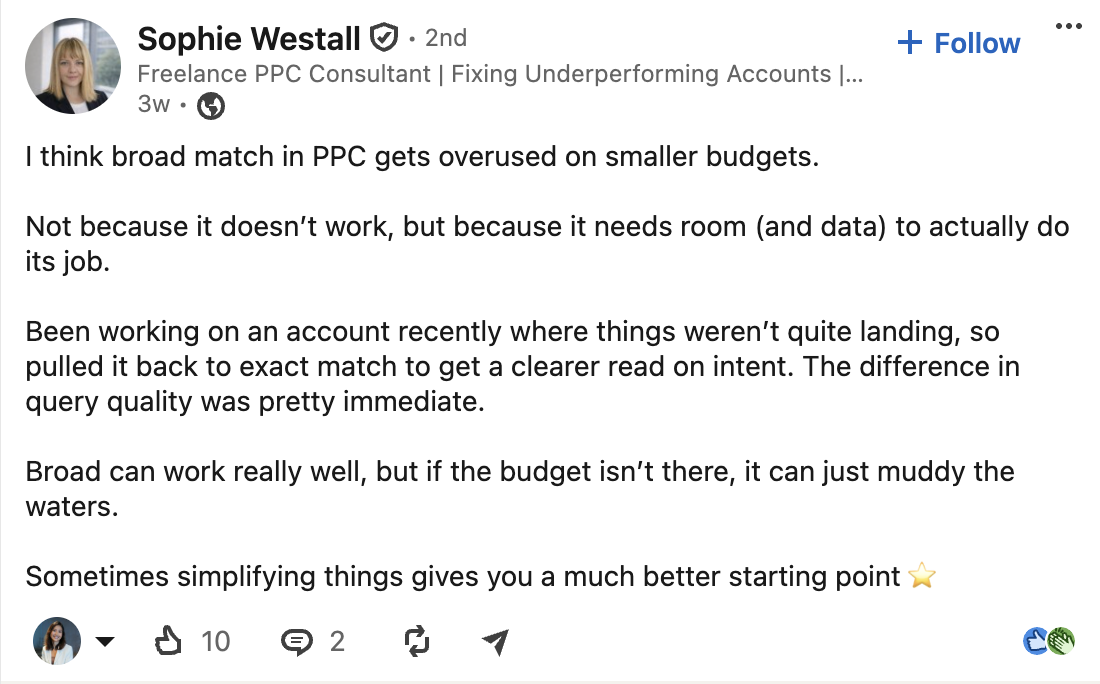
Broad match works best when you have a reasonable campaign history with conversion data. It is well-suited to B2C businesses with broader audience pools and larger budgets. In such conditions, it can often bring higher conversion rates and lower CPA than the other match types. It is not recommended, however, for new campaigns with no conversion history and low budgets. In these accounts, broad match often leads to fast budget spend with minimal conversions.
From our experience and testaments of various industry experts, broad match also usually doesn’t perform as well for B2B businesses which require more accurate targeting, and often result in wasted budgets on irrelevant clicks that do not convert.
Phrase Match
How it works
Phrase match sits between broad match and exact match in terms of reach and control. Your ad appears when a user’s search includes similar meaning of your keyword phrase — regardless of whether it contains the exact words.
Since 2021, when Google retired the broad match modifier, phrase match absorbed some of that modifier’s behaviours. This means phrase match today is somewhat looser than it used to be, and behaves more like broad match keywords did a few years ago.
Syntax: Place the keyword inside quotation marks. Example: “running shoes”
Example in practice
If your phrase match keyword is “running shoes,” your ad could appear for searches like:
- “best running shoes for women”
- “affordable running shoes in KL”
- “athletic footwear for men”
- “Nike shoes”
But it should not appear for searches that have a different meaning:
- “casual shoes” (different meaning)
- “shoe repair near me” (different intent)
Pros
- More targeted than broad match, but still more inclusive of related search queries
- Good for capturing different phrasings of the same intent
Cons
- Has become looser over time and less predictable — can still pull in searches that feel off-intent
- Still requires regular Search Terms report reviews to add exclusions to irrelevant keywords
- Does not leverage “buying signals” that broad match keywords do (according to verbal reports by Google reps and experts)
When to use phrase match
Phrase match is a practical middle ground when you want more control than broad match provides, but still need enough reach to generate volume and results. It works well campaigns targeting specific products, locations, or services where the core intent is consistent but the exact phrasing varies. It is also a safer alternative to broad match for many B2B businesses.
Exact Match
How it works
Exact match gives you the tightest control over which searches trigger your ads. Your ad appears only when the search query has the same meaning or intent as your keyword. However, “exact” no longer means perfectly identical — Google allows close variants, including different word orders, plurals, and implied words, as long as the meaning is similar.
Syntax: Place the keyword inside square brackets. Example: [running shoes]
Example in practice
If your exact match keyword is [running shoes], your ad could appear for:
- “running shoes” (exact)
- “shoes for running” (reordered, same meaning)
- “run shoes” (close variant)
But it should not appear for:
- “best running shoes for beginners” (additional modifier changes specificity)
- “trail running gear” (different product category)
Pros
- Highest level of targeting precision
- Best quality traffic — users searching with clear, specific intent
- Ideal for high-value keywords where conversion rate matters more than volume
Cons
- Lower reach — you will miss valid searches that fall outside the close variant rules
- Requires a broader keyword list to cover all relevant variations
- The narrow targeting can often leads to minimal results (low impressions, clicks, conversions)
- Leads to the higher CPC prices compared to other match types (because of more advertisers are also bidding on the same high-intent keywords)
When to use exact match
Exact match is the right choice when it is important to the business to show ads only to searchers with buy intent or searches of a highly specific service or product. This is common in B2B campaigns, niche industries, industries with high CPCs and campaigns with limited budgets where every click needs to count.
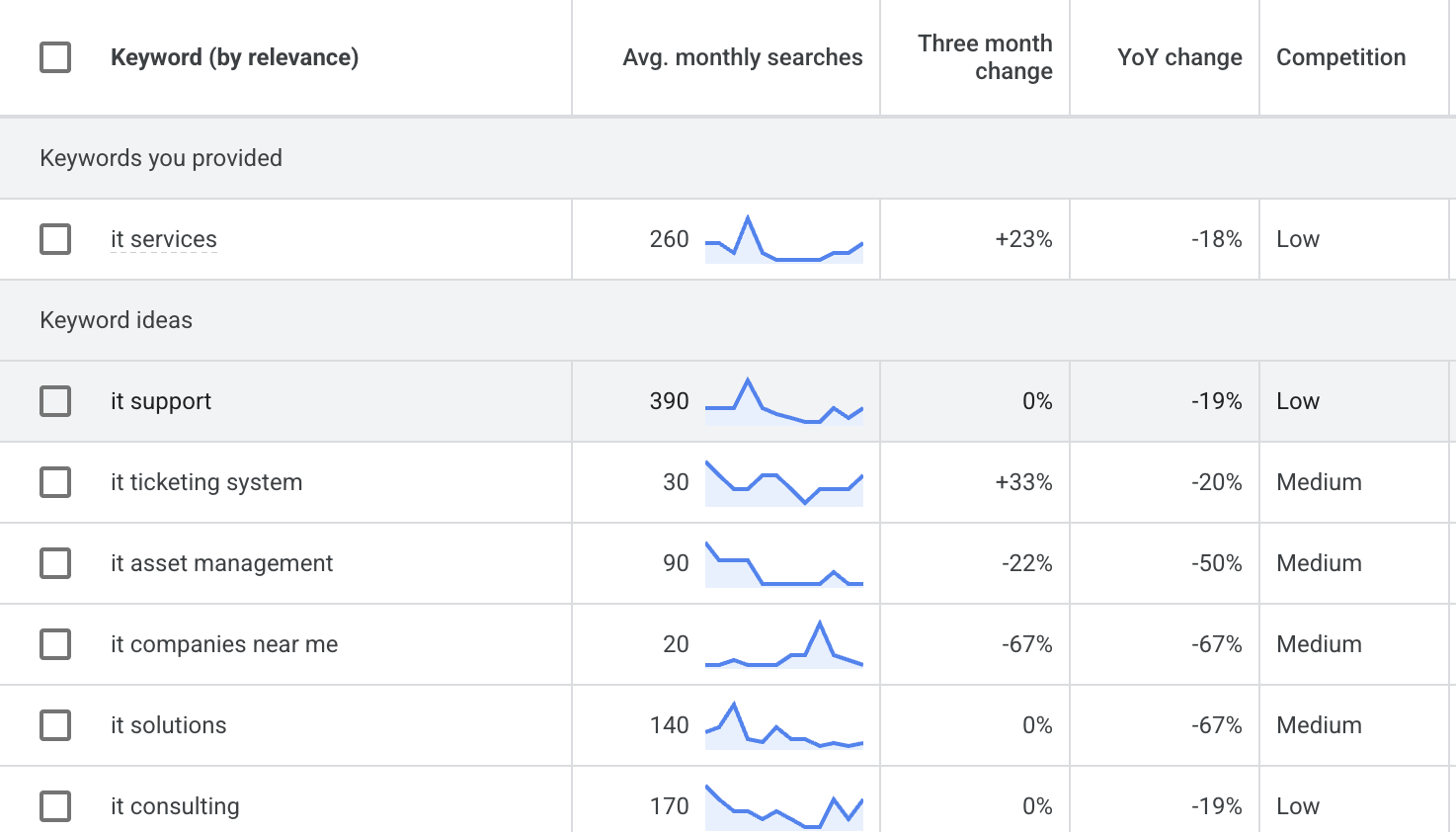
It is also recommended for all campaigns in general to add an exact match version of your highest-converting keywords to more aggressively target them.
Quick Comparison: Broad vs Phrase vs Exact Match Keywords
| Broad Match | Phrase Match | Exact Match | |
|---|---|---|---|
| Reach | Widest | Medium | Narrowest |
| Control | Lowest | Medium | Highest |
| Syntax | Keyword | “keyword” | [keyword] |
| Traffic Quality | Variable | Moderate | High |
| Risk of Wasted Spend | High | Medium | Low |
| Best for | Discovery, high budgets, B2C | Mid-funnel, specific services | B2B, proven keywords, limited budgets |
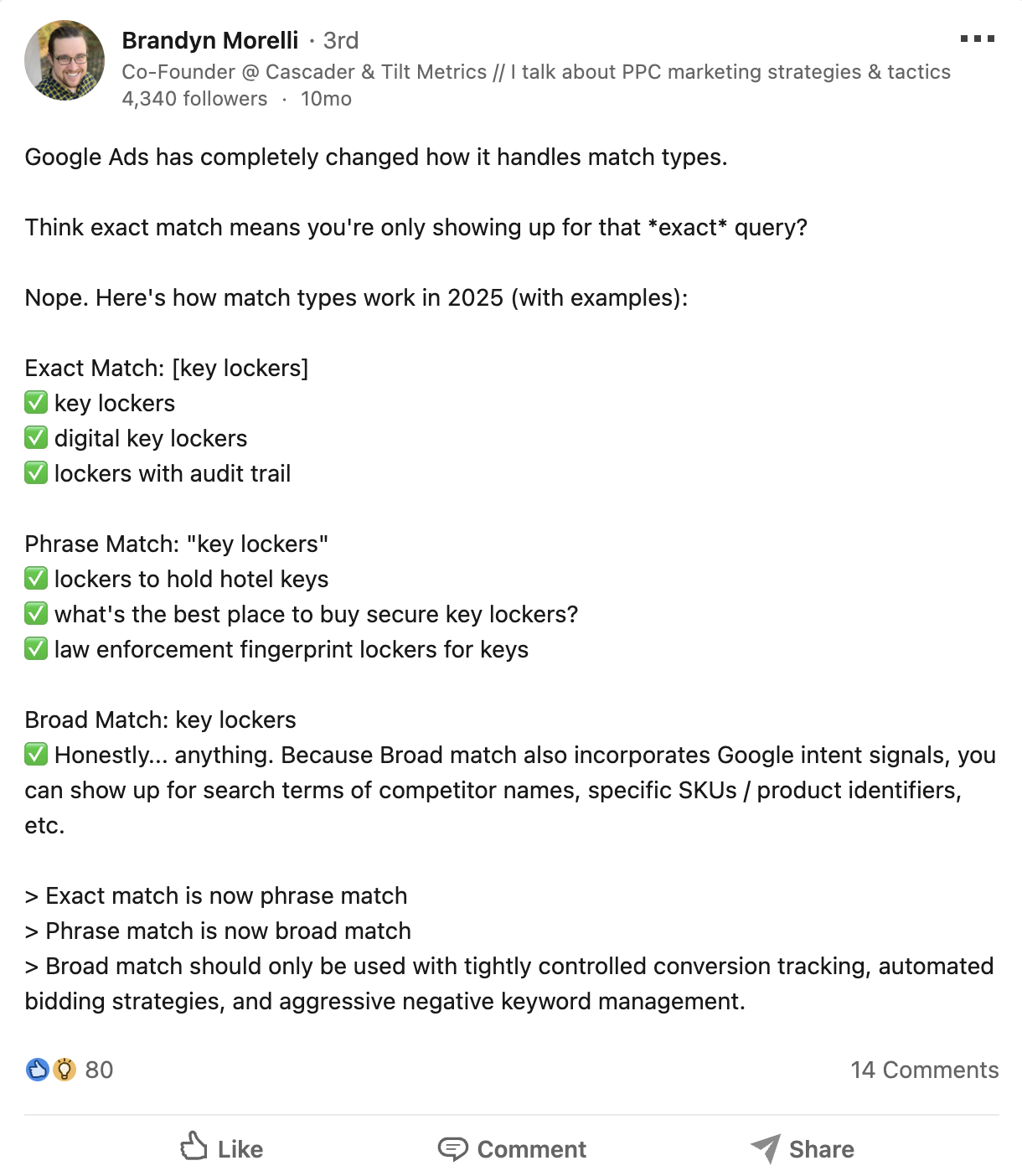
From our own observations managing Google Ads campaigns, Google Ads match types today drift more loosely from the original keywords in general than how they used to a few years ago. Exact match today behaves closer to how phrase match did before. Phrase match behaves closer to how broad match used to. And broad match has gotten looser than ever.
Which Keyword Match Type Should You Use?
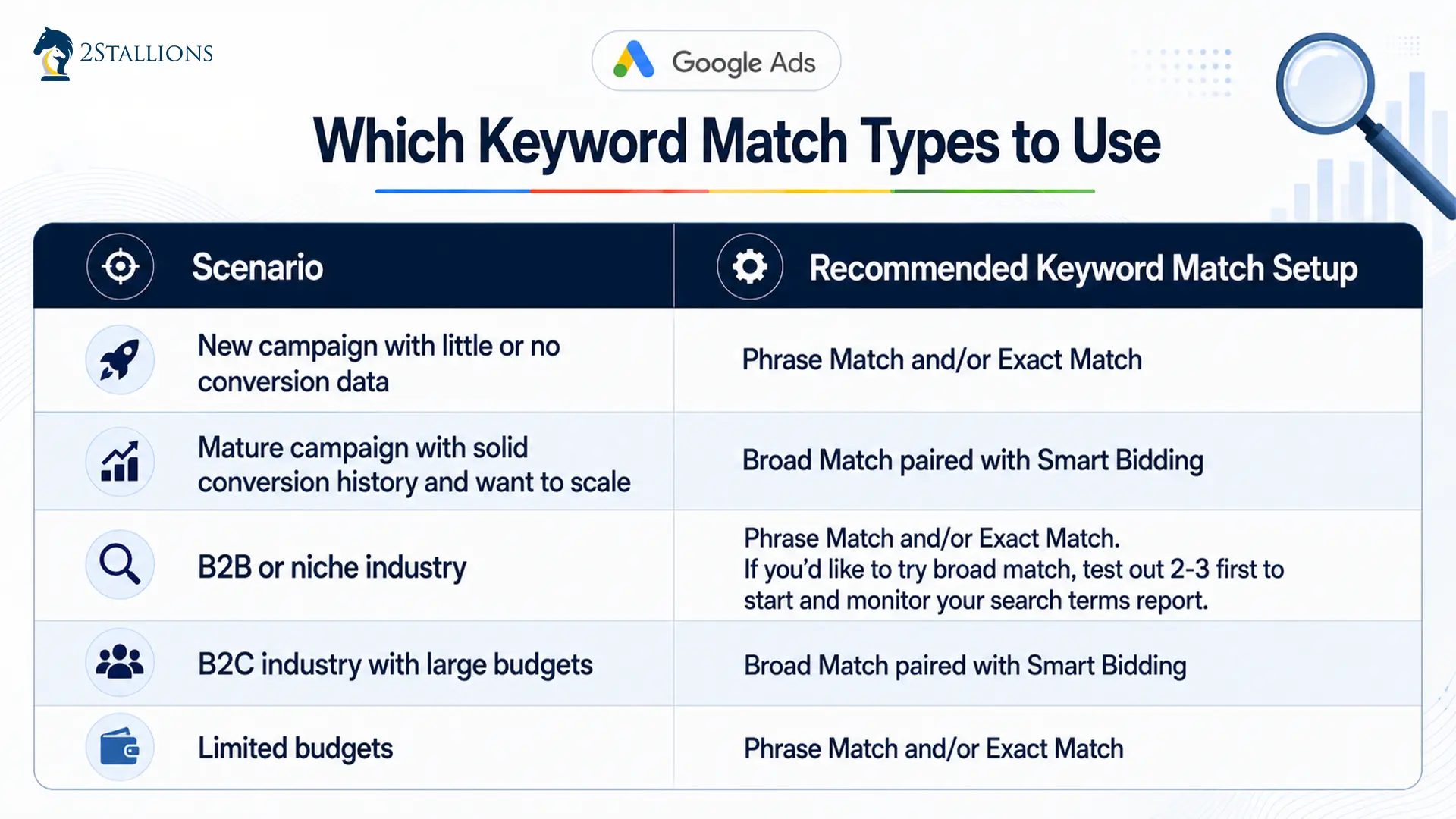
The answer is, it depends. The best performing keyword match types constantly vary between different campaigns as they are influenced by many factors such as the industry, budget to the maturity of the account and conversion data. Strategies also differ among expert practitioners, with some being proponents of broad match, while others swear by phrase and exact match. Nevertheless, these are some guidelines to start with.
If you are launching a new campaign with no conversion data: Start with phrase match and/or exact match. Broad match without conversion history gives Google too little signal to work with, and you risk spending your budget on irrelevant traffic that yield minimal conversions.
If you have a campaign with solid conversion history and want to scale: Add broad match keywords paired with Smart Bidding. Google’s machine learning performs best when it has conversion data to learn from. Without it, broad match becomes unpredictable.
A more cautious way to test out broad match is to use the ‘Experiment’ campaign within Google ads to compare the existing campaign vs a new campaign with broad match versions of the same keywords.
If you are running a B2B campaign or operating in a niche industry: Start with phrase and/or exact match for your primary keywords. Precision especially matters in B2B where CPC prices are often high, you’d only want to show ads to people searching for the exact service that you offer.
If you are running a B2C campaign with a larger budget: A mix of broad and exact match typically performs well. Use broad match for discovery and testing, and later add the exact match versions of your top-converting keywords.
For most campaigns, a combined approach works best: Use exact match for your core, highest-converting keywords. Use phrase or broad match to capture variation and discover new opportunities. Review your Search Terms report weekly, and add irrelevant queries as negative keywords.
Google Ads is well-known for being unpredictable, where what works best can be very different business to business. Ultimately, the only way to know what works for your specific business or campaign is to test. Run exact and phrase match first, review your Search Terms report after two to four weeks, then introduce a few broad match keywords once you have conversion data. Monitor your clicks and conversion metrics to discover the keyword match types that lead to the highest conversion rates and lowest cost per conversion.
Ready to Get More From Your Google Ads Budget?
Match type strategy is one layer of a well-run Google Ads campaign. As a Google Partner agency, 2Stallions’ Google Ads experts manage campaigns across Singapore, Malaysia, and the broader SEA region — with a focus on reducing wasted spend and improving qualified traffic.
If you want a campaign that is built around your actual business goals, explore our Google Ads services or book a free consultation with our team.

The Role of Negative Keywords
No match type strategy is complete without negative keywords. Even exact match can pull in searches that are not relevant to your business. Negative keywords tell Google which searches should never trigger your ads, regardless of the match type you are using.
For example, if you are a premium catering company, you might add “cheap,” “free,” “DIY,” and “recipe” as negative keywords. This prevents your ads from appearing for budget or informational searches that are unlikely to convert.
Negative keywords also come in three variants — negative broad match, negative phrase match, and negative exact match — and each behaves differently in terms of how strictly they block searches. For most cases, negative broad match keywords would be the most effective in blocking all variations of the unwanted search term.
Experts would usually review the Search Terms report weekly to bi-weekly (possibly more frequently for a brand new campaign) and identify irrelevant queries to be added as negative keywords. The end goal is to build a comprehensive list of negative keywords that exclude as many irrelevant searches as possible, which improves targeting toward searches most likely to convert and the campaign results over time.

Source: OutsourceSEM
Conclusion
Keyword match types are one of the foundational decisions in any Google Ads campaign. Get them right, and your budget goes toward searches with genuine intent. Get them wrong, and you pay for traffic that was never going to convert.
The short version: start with tighter match types, build your negative keyword list, gather conversion data, and then scale with broader match types once Google’s Smart Bidding has enough signal to work with. Review your Search Terms report regularly and adjust as your campaign matures.
If you want expert support building a Google Ads campaign, explore 2Stallions’ Google Ads services or book a free consultation with our team.
2Stallions: Who We Are
2Stallions is an award-winning, full-service digital marketing agency with offices in Singapore and Malaysia. Since 2012, we’ve helped brands of all sizes turn strategy into growth through SEO & GEO services, SEM services, social media marketing services, content marketing services, to website design and development.
Need funding support? We’ve got that covered too. 2Stallions is a pre-approved vendor for the PSG Digital Marketing Grant, allowing eligible Singaporean SMEs to claim up to 50% off our services. We are also a registered vendor of the Digi-TAC Grant.
Our results-oriented approach has earned us various industry accolades, from the Marketing Excellence Awards, Asia eCommerce Awards, the Drum Awards for Digital Advertising APAC to Quantum Leap in AI & Digital. We’re also certified partners with Google, TikTok, and Shopify, giving you direct access to the tools, insights, and support that drive real digital performance.
Let’s grow your business. Book a free strategy consultation and get your custom roadmap to digital success.