Content
SHARE

Why SEO Still Matters for E-commerce Growth
With 2.8 billion people shopping online and global e-commerce sales projected to hit $6.8 trillion this year, competition in 2026 is no longer just about visibility, it’s about ownership. While paid search click shares have surged to capture nearly one-third of all clicks, these gains disappear the moment you stop paying. SEO remains the only channel delivering compounding growth and the organic authority that 53% of all web traffic still relies on. This guide breaks down why organic search is your most valuable long-term asset.
ECommerce SEO Fundamentals: Understanding Your Customer’s Mindset
Good SEO starts before you write any product descriptions. It begins with setting up your website properly and understanding your customers.
-
Strategic Keyword Research:
Find the exact words and phrases your audience uses. Modern platforms let you add these keywords into URLs, page structures, and site navigation without unnecessary complexity.

Example of keyword research used to structure URLs and pages.
-
Understand User Intent:
You must distinguish between users seeking information and those ready to purchase. This helps you design a smooth experience that meets their needs. For example, a commercial keyword might be “best running shoes for beginners,” while a transactional keyword could be “buy running shoes online.”
-
Optimizing On-Page Signals:
To ensure search engines understand your content’s relevance, you must have full control over meta tags, title tags, headings, and image alt tags.

Example of meta title and description
Schema Markup and Structured Data
Schema markup (also known as structured data) helps search engines and AI systems better understand the content on your website. In 2026, using structured data, especially product schema – is critical for enabling rich search results such as pricing, availability, ratings, and reviews to appear directly in search listings.
Schema markup is typically implemented using specialised schema markup plugins or SEO plugins with built-in schema features, such as Rank Math. These tools allow marketers and site owners to add and edit schema without writing code, ensuring the data is accurate and consistently applied across the site.
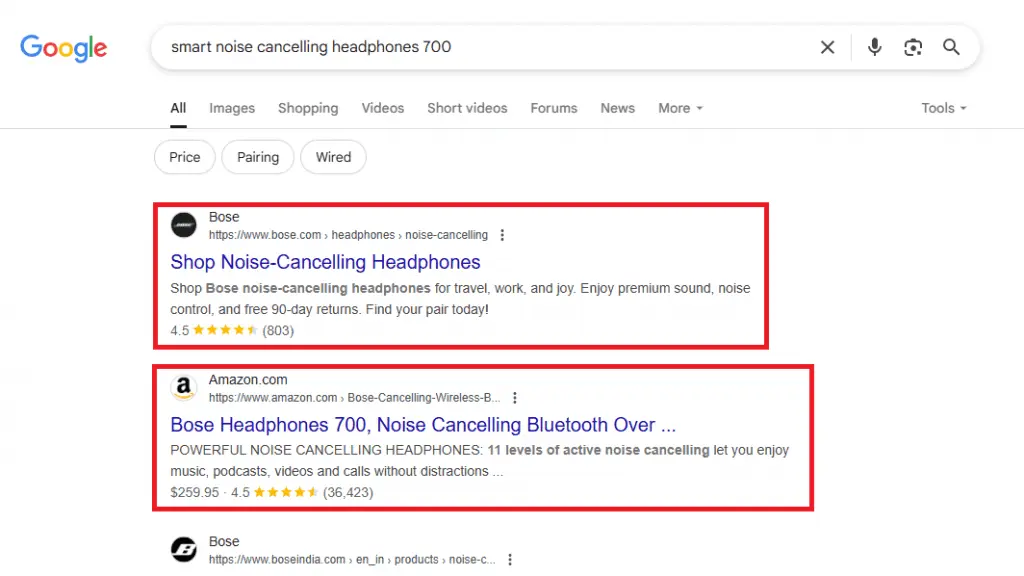
Example of a product schema showing price, availability, and ratings as displayed in search results.
ECommerce Content Strategy: Writing for Sales and Search
Content is the primary growth lever for modern ecommerce sites, especially those built on content-rich foundations like WordPress or Shopify.
-
Persuasive Product Description:
Don’t just use the text from manufacturers. Write unique and engaging descriptions that show why your product matters. AI tools can help draft descriptions and suggest SEO improvements, but review them yourself to keep your brand voice authentic.

Example of good product description
-
The Power of Customer Reviews:
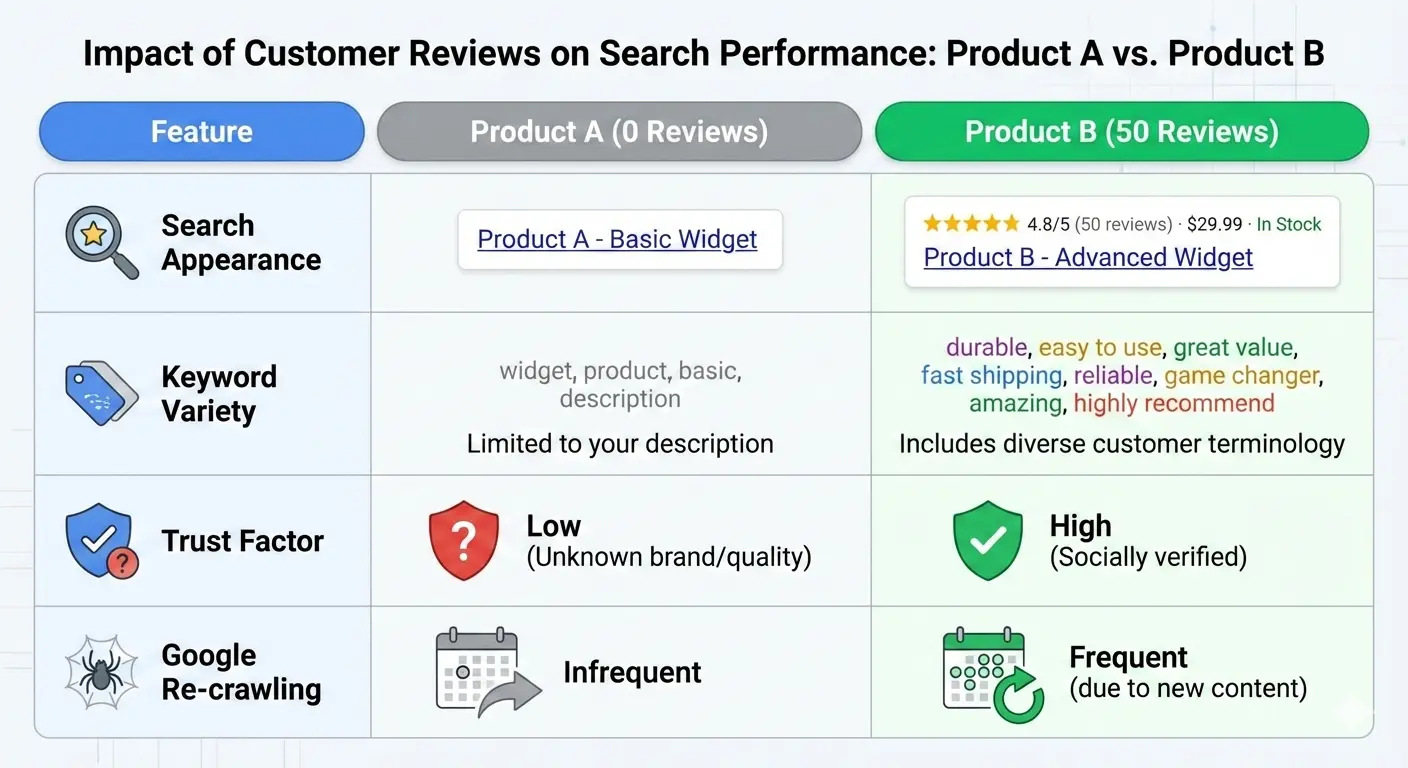
Product reviews build trust and improve your SEO. They act as a “vote of confidence” and let search engines show rich snippets like star ratings and product availability.
-
Establishing Authority:
High-quality backlinks show search engines your site is trustworthy. Creating in-depth content like buying guides, comparison articles, or how-to tutorials helps your entire website rank higher.

Example of blog comparing best runners shoe example
Building a High-Performance User Experience (UX)
Your ecommerce site needs to be fast, easy to use, and mobile-friendly. If a page takes more than 2 seconds to load, most customers will leave. In 2026, search engines care about Interaction to Next Paint (INP) – basically, how quickly your site responds when someone clicks a button.
Managing all this while running a business can be overwhelming. That’s where 2Stallions’ SEO Services can help – from technical audits to AI-ready content strategies that future-proof your store.

Mobile-First Design: As the majority of users now browse the internet on mobile devices, search engines prioritize the mobile version of your website for indexing and ranking. Your site layout must be fully responsive and optimized for fast mobile rendering to meet Google’s mobile-first standards and deliver a seamless user experience across devices.

Maximizing Site Speed: Site speed directly affects both SEO rankings and conversion rates. Search engines prioritize sites that meet Core Web Vitals standards, which can be improved by using techniques like image compression, minifying code, and leveraging CDNs. Be careful not to clutter your site with too many extensions, as these can significantly slow down performance.
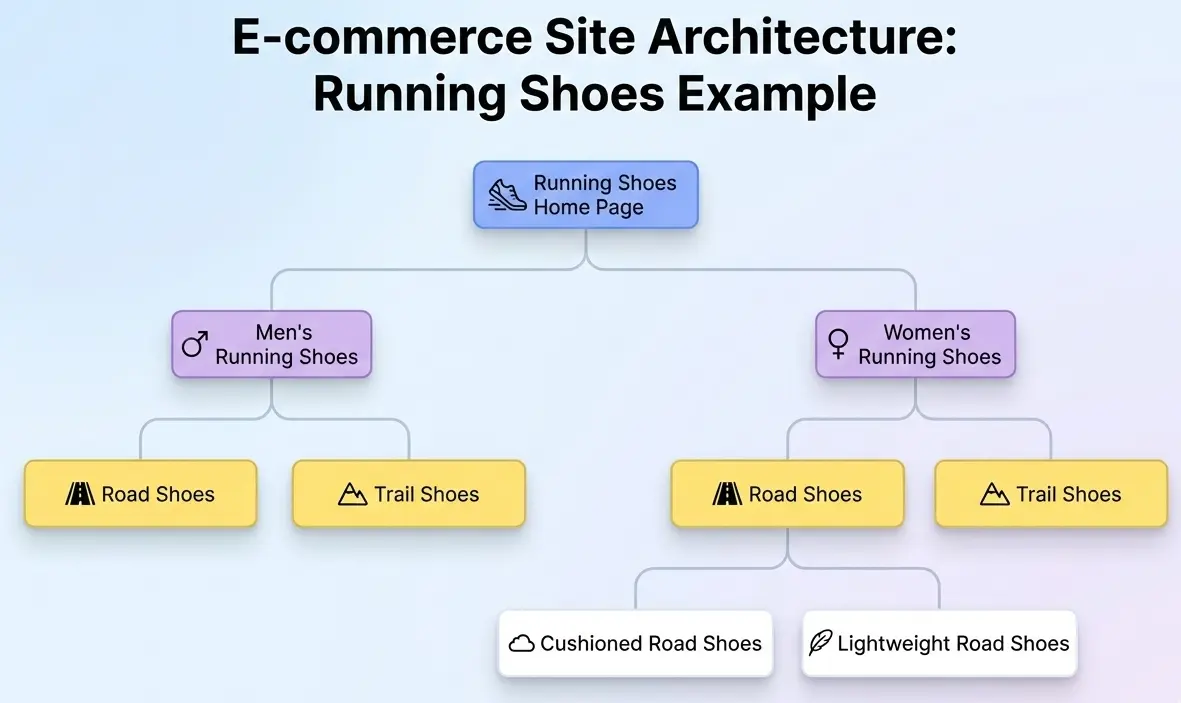
Intuitive Site Architecture: A well-structured, flat navigation system helps both users and search engine crawlers find pages easily. Clean, semantic HTML code improves crawlability, ensuring that search engines can effectively index your inventory.
Adapting to the Next Generation of ECommerce Search
The landscape of search is shifting toward AI-driven answer engines and unconventional touchpoints.
-
Optimizing for Voice Search:
With the rise of smart home devices and virtual assistants, incorporating natural language and long-tail keywords is essential for capturing voice-driven queries. Example: “Best running shoes for flat feet” instead of “running shoes flat feet.”
-
AI-Driven SEO:
Modern SEO requires preparing for AI-powered search engines like Google AI Overviews, ChatGPT, and Perplexity. To be surfaced by these Large Language Models (LLMs), your site needs:
- Clear page structure
- Clean semantic markup
- Trusted, high-quality content that AI tools can reference. Implementing schema markup (structured data) helps search engines and AI tools clearly understand and trust your content by providing explicit signals such as product details, reviews, and availability, making it easier for your content to be referenced and surfaced in AI-driven search results.
-
Omnichannel Integration:
SEO is no longer limited to your website. Your brand should also be visible on:
- Social media platforms
- Online marketplaces
- New devices and apps
Conclusion: Staying Ahead of the Curve
SEO is not a one-time setup but a proactive, continuous process of optimization. The efforts you put in today prepare your business to thrive in the digital landscape of 2026 and beyond. Remember that while your platform is the foundation, your strategy must evolve alongside changing search engine and AI algorithms.
Don’t wait for your traffic to dip. Audit your current SEO performance today and begin implementing these practical steps to build a sustainable, organic growth engine for your store.
2Stallions: Who We Are
2Stallions is an award-winning, full-service digital marketing agency with offices in Singapore and Malaysia. Since 2012, we’ve helped brands of all sizes turn strategy into growth through SEO services, SEM services, social media marketing services, content marketing services, to website design and development.
Need funding support? We’ve got that covered too. 2Stallions is a pre-approved vendor for the PSG Digital Marketing Grant, allowing eligible Singaporean SMEs to claim up to 50% off our services. We are also a registered vendor of the Digi-TAC Grant.
Our results-oriented approach has earned us various industry accolades, from the Marketing Excellence Awards, Asia eCommerce Awards, the Drum Awards for Digital Advertising APAC to Quantum Leap in AI & Digital. We’re also certified partners with Google, TikTok, and Shopify, giving you direct access to the tools, insights, and support that drive real digital performance.
Let’s grow your business. Book a free strategy consultation and get your custom roadmap to digital success.