

Almost every marketing team now has a tool that can write a blog post in under a minute. Ask those teams what AI has improved, and very few say quality.
Those aren’t outside critics talking. In the 2027 research by the Content Marketing Institute (CMI) and MarketingProfs, 88% of business-to-business (B2B) marketers say their organisation uses AI content tools[1]. Asked what AI improves, 78% named speed and only 17% named quality[1].
So teams make more content, and little of it is better. Meanwhile, fewer people read it where you published it. More of it now gets read inside an AI answer or a social feed. Below are seven trends on one radar, each with what to do first and then the dated evidence.
Why content marketing changes in 2027: from clicks to being named and remembered
For years, content was easy to report on. You published a post, it ranked, and you counted the visits. For almost a third of B2B marketers, that count is now going down.
In the same CMI survey, 31% of B2B marketers saw website traffic rise over the last 12 months, and 31% saw it fall[1]. Of those whose traffic fell, 79% blamed AI-powered search[1]. Forrester titled its 2027 content predictions “Humans Reclaim Content Creation; Machines Dominate Content Consumption”[2].
The job of content is moving. It’s now mostly about getting your brand named in AI answers, remembered by buyers, and trusted when they’re ready to talk. You can test this in your own data: compare branded searches and direct enquiries with blog visits over the same 12 months. The clicks that still come tend to come later, from people who already know who you are. The 2Stallions digital marketing trends for 2027 makes the same case for brand building.
Awareness is harder to report than traffic. Someone in your business will ask why the website graph is flat, so have the new measures ready before they ask (see How to act).
The 2027 content trend radar
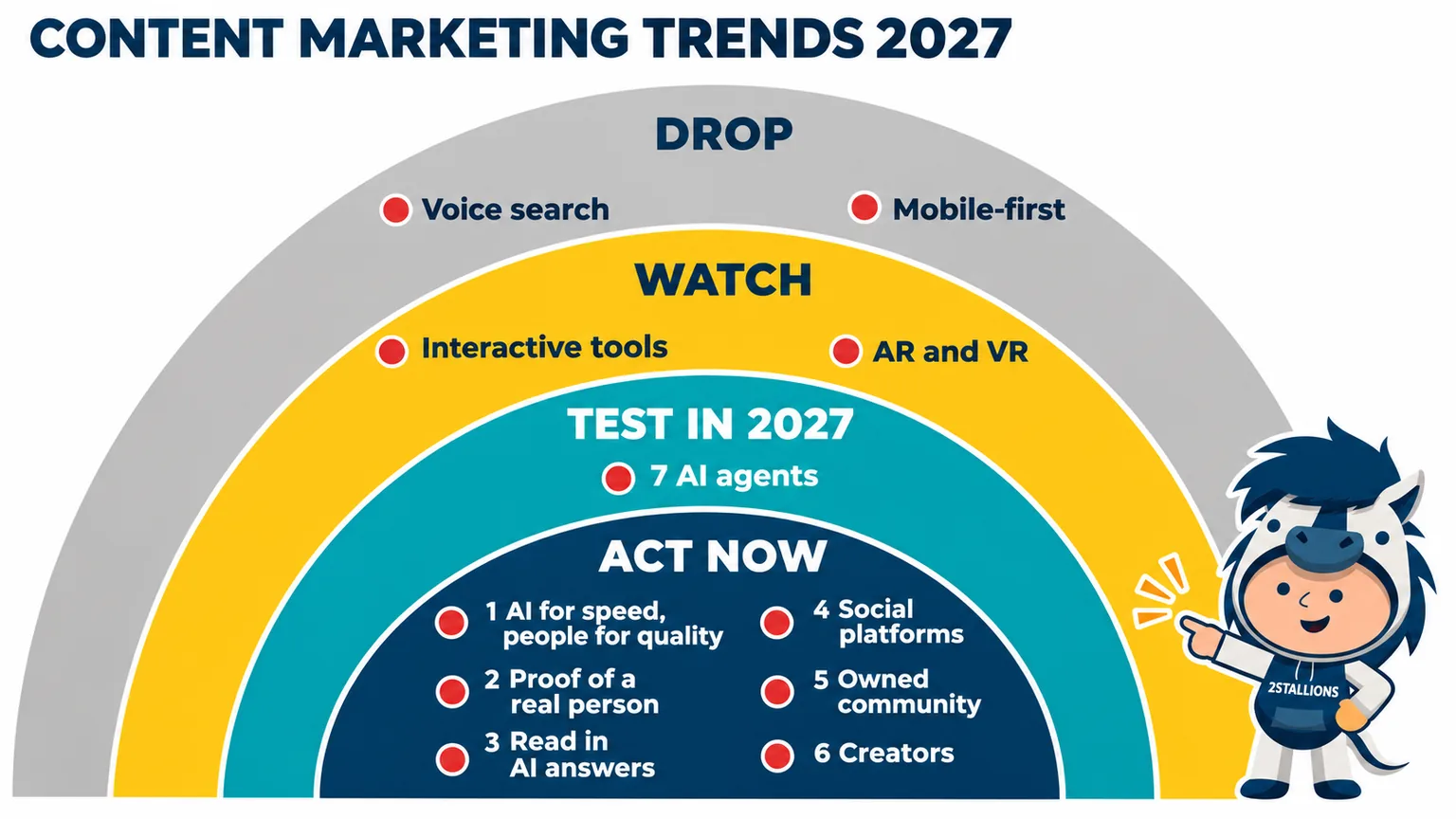
| Ring | What it means | Trends in this ring |
|---|---|---|
| Act now | It works today, with proof. Put budget behind it. | 1. Faster, same quality, 2. Proof of a real person, 3. Read in AI answers, 4. Social platforms, 5. Owned community, 6. Creators |
| Test in 2027 | Ready for a pilot with a clear success measure | 7. AI agents in the content team |
| Watch | Real, but not ready for most budgets | Interactive content and tools; immersive AR and VR content |
| Drop | Stop planning around it as a trend | Voice search as a separate tactic; “mobile-first” as a trend |
A trend is in Act now when 2026 data shows your readers already behave this way, or marketers are already moving budget to it. It’s in Test when many teams try it but few rely on it.
If you can only fund two this year, start with trend 3 (check whether AI answers name you) and trend 5 (one owned channel). Both protect you as clicks fall, and neither needs a big budget to start.
The 7 content marketing and content creation trends for 2027
1. AI makes content faster, and quality stays the same
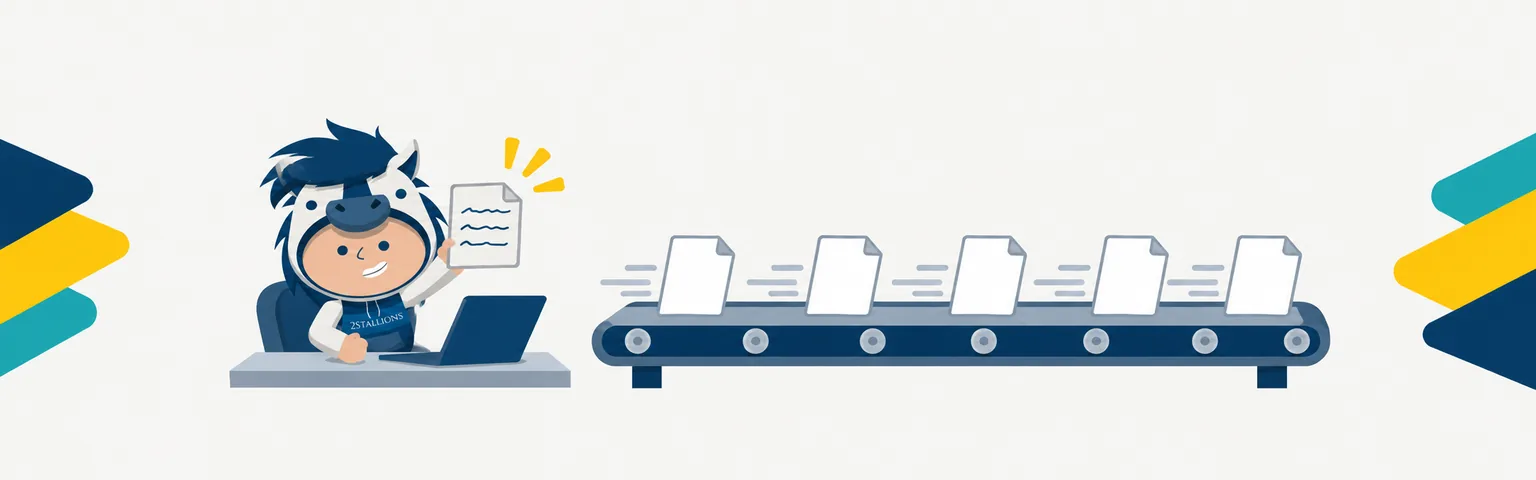
Only 17% of B2B marketers say AI improves the quality of their content, against 78% who say it improves speed[1].
What to do
Use AI for the slow parts, such as research notes, first outlines and repurposing. Keep a person responsible for the point of view, the examples and the final edit. Before a piece goes out, that person checks three things: a named author, at least one fact with a date and a source, and one example from your own work. If it fails one of the three, it doesn’t go out.
How many marketers already use AI for content?
Almost all of them do. CMI’s 2027 survey of 861 B2B marketers found 88% say their organisation uses AI-powered content creation tools[1]. Only 12% rated their organisation’s marketing overall as highly effective[1].
Who pays when content gets faster and quality stays the same?
The reader first, who finds 10 versions of the same article. Then the brand, whose content becomes easy to skip. The open problem in 2027 is AI flattening your content into the same article everyone else publishes.
Who should act on this?
Any team that publishes every week. One limit: the CMI figures come mostly from North American B2B marketers.

2. Proof of a real person becomes the edge
HubSpot’s 2026 State of Marketing found 62.7% of marketers believe more unique, human-centred content is needed to compete with AI content[3].
What to do
Give every important piece a named author, and run it through the three checks in trend 1 before it goes out. Then add one thing your team saw first-hand, the way the ad-creative example in trend 7 does. There’s more on brand stories in the 2Stallions guide to the future of branding.
Why does human content matter more in 2027?
Forrester predicts human-generated content “will become a top priority again for 50% of brands” in 2027[2].
The reason is trust. Only 20% of people trust answers from AI chatbots, according to the Reuters Institute’s survey of 48 markets[4].
What counts as proof of a real person?
Every brand claims to be authentic. Several of them have a three-stage approval process for the “candid” team photo. Real proof is harder to stage. A brand story works the same way: tell it through the real people and decisions behind it.
Who should act on this?
Firms whose buyers choose on trust, such as professional services. One limit: proof takes time from the people who have it, and they’re usually the busiest.

3. Your content gets read off your site, in AI answers
The Reuters Institute found 10% of people now use AI chatbots for news, up from 7% a year earlier[4].
What to do
Check whether AI answers show and cite you. Google added reports in June 2026 that show how often your pages appear in its AI features, by page, country and date[5]. Bing Webmaster Tools, in a public preview, shows the total number of citations displayed as sources in AI-generated answers[6]. The 2Stallions guide to search everywhere optimisation (SEO) trends covers how to write for it.
Do people still click through from AI answers?
Fewer than half do. Of the people who use AI chatbots for news, 42% say they always or often click through to the sources[4].
That’s not a loss if the answer names you. A reader who learns from your content inside an AI answer still learns it from you. (Yes, some of you are reading this article that way.)
How do you get your content into AI answers?
The basics still decide it. Google says there are “no additional requirements to appear in AI Overviews or AI Mode”[7].
You can also see which questions to answer. Bing’s AI Performance report shows the key phrases the AI used when retrieving content that was referenced in AI-generated answers[6]. Take the top phrases for your most-cited page, and check that the page answers each one in its first two sentences.
Who should act on this?
Brands that answer the questions buyers ask before they talk to anyone. One limit: the click-through figure comes from news use, so treat it as a sign of direction for your sector.

4. Social platforms become where your content lives and gets found
The Reuters Institute found social and video networks are used for news by 54% of people, ahead of news organisations’ own websites and apps at 51%[4].
What to do
Make each post complete on the platform, so a person gets the value without clicking. Start with short video, and with TikTok if you sell in Malaysia or Indonesia. Then give them a reason to join your own channels (trend 5). See the 2Stallions social media trends.
How far along is the shift in Southeast Asia?
In Southeast Asia the shift is further along. More than 40% of people in Malaysia and Indonesia use TikTok for news[4]. In Indonesia, where social and video networks have long led as the main source of news, that share rose eight points to 48%[4]. In Singapore, 59% get news through social media[8].
Do people search on social media?
Yes. A Sprout Social survey of 2,250 social media users in the United States, the United Kingdom and Australia found Gen Z respondents regularly search on TikTok (47%) and Instagram (41%)[9].
Which format earns the most return?
Short video earns the most. Each week, 77% of people watch online news video[4]. HubSpot’s marketers ranked short-form video first for return on investment, at 48.6%[3].
Who should act on this?
Brands whose buyers include Gen Z, and anyone marketing in Malaysia or Indonesia. One limit: the platform owns the audience, so your reach can change when its rules change.

5. Build an owned community you can reach directly
CMI found 42% of B2B marketers name owned media as a top investment area for 2027, up 10 points[1].
What to do
Pick one channel and give people a clear reason to join. Ask for consent, and post on a steady rhythm. Track list growth, opens and replies each month, next to website visits.
Why build an owned community now?
If AI answers and platforms own the reach, the one audience you can count on is the one that chose to hear from you. On your own list, no algorithm decides whether people see your message.
In Validity’s 2026 email research, the top 8% of email marketers, those reporting a return of 45:1 or higher, prioritise relational content, especially newsletters and onboarding sequences[10]. That survey covered 500+ marketers in the United States, the United Kingdom, Australia and New Zealand[10].
What can an owned community be?
An email newsletter, a WhatsApp group or community, a Telegram group, or a members’ forum. Pick the one your audience already opens every day.
A community also tells you what to write. Members’ questions show you the next topic. Their own stories can also become proof of a real person (trend 2).
Who should act on this?
Brands with a steady stream of useful updates, such as offers, insights or events. One limit: a community needs someone to answer messages every week. An unanswered group is worse than none.

6. Creators become trusted sources
The Reuters Institute found 27% of people came across news from news creators or influencers in the past week[4].
What to do
Work with smaller creators whose audience trusts them. Give each creator one sentence about your brand to say in their own words. Then read the comments. If viewers repeat that point, the brief worked. See the 2Stallions influencer marketing trends.
Do creator recommendations lead to sales?
They often do. In Sprout Social’s survey, 67% of people bought something in the past year because of an influencer’s recommendation[9]. They trusted everyday users (57%) for product recommendations far more than mega-influencers (9%)[9].
What does creator content cost the brand?
Kantar found a net 61% of marketers planned to increase creator content investment in 2026, but only 27% of creator content ties strongly to the brand[11].
That last figure is the cost nobody puts in the plan. When creator content doesn’t tie strongly to the brand, viewers can remember the creator and forget who paid for it.
Who should act on this?
Consumer brands and any brand selling to Gen Z. One limit: the Sprout Social figures come from the United States, the United Kingdom and Australia only.
7. AI agents join the content team, and someone has to set the rules
In CMI’s 2027 survey, 59% of B2B marketers use or experiment with AI agents, up from 28% in its previous survey[1].
What to do
Pick one repeatable task, such as turning a webinar into posts. Write down the rules: the sources it may use, the tone, and what needs a person’s sign-off. Name the person who owns the result.
What is an AI agent?
An AI agent is software that takes a goal and carries out the steps on its own, such as drafting, formatting and scheduling. Forrester predicts agentic AI will trigger the consolidation of one-third of content point solutions, and that “the lifespan of content created for influence will shrink to 30 days”[2].
Why test agents and not roll them out?
Many teams try them, but few rely on them. Only 13% of B2B marketers call agents a core part of their marketing strategy; 46% experiment with them[1].
What has 2Stallions automated?
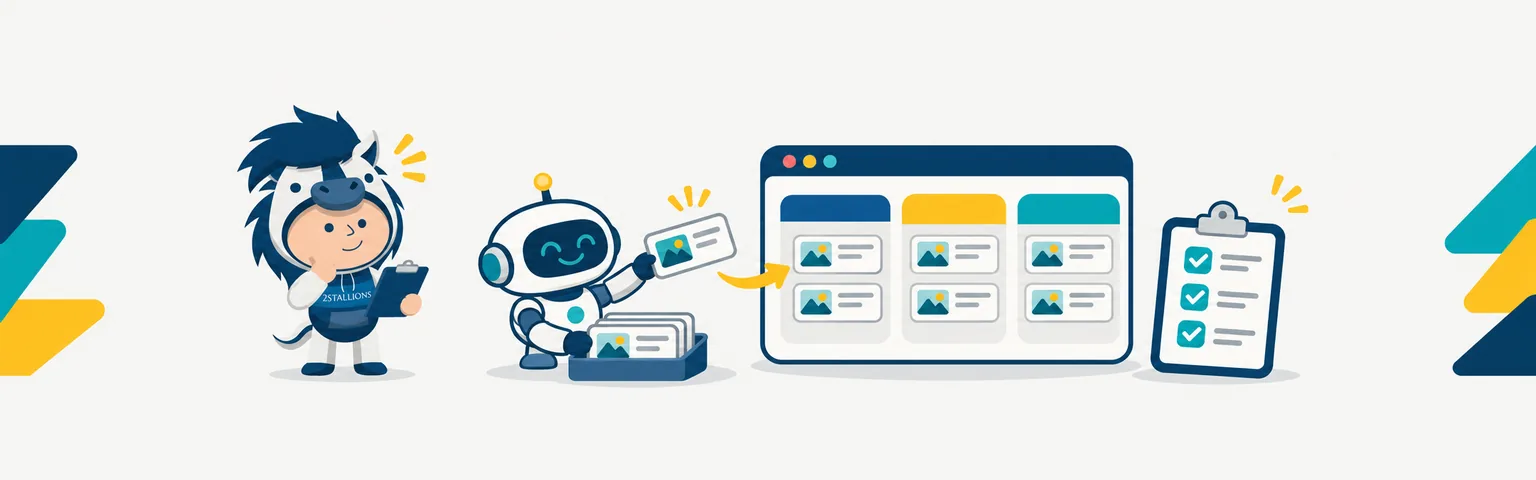
At 2Stallions, we automated the production of ad copy and ad creatives. The system makes each ad in every size the ad platform needs and puts the versions on a dashboard. Clients approve, reject or comment there, so the next round comes back quickly.
We do not trust it to come up with copy or creatives without input and context from the specialist who manages the account. We do not run anything without the client’s go-ahead. What it gives us is speed: we move through ideas, land on a new one, make versions, get feedback and go live sooner.
I can’t code. This year I have still built work automations with Claude Code and Gemini. The tool did the heavy lifting; I still had to know what I was asking for.
Who sets the rules for an agent?
Knowing what to ask doesn’t automate, so write the rules down before an agent runs. The two above are a working start: the account specialist’s input comes first, and nothing goes live without the client’s go-ahead. In a team, that’s an operations question as much as a marketing one.
Who should act on this?
Teams with repeatable content tasks. One limit: an agent repeats a mistake at scale until someone notices it.
Watch and drop
- Watch: interactive content and tools. Quizzes, calculators and interactive video still work when they solve a real task for the reader. Fund one only when it does that task.
- Watch: immersive augmented reality (AR) and virtual reality (VR) content. It stays out of most content budgets for now. Come back to it when your buyers start asking for it.
- Drop: voice search as a separate tactic. Plan it as part of AI answers (trend 3). The 2Stallions digital marketing trends post explains why.
- Drop: “mobile-first” as a trend. It’s now a basic need. Every page should work well on a phone.
How to act on these trends in 2027
- Decide what your content is for. If the answer is only traffic, trends 3 and 4 will make your reports look worse every quarter.
- Add new measures next to website visits: how often your pages appear in AI answers (Google Search Console) and get cited (Bing Webmaster Tools), branded searches, and owned list growth.
- Put a named person and something only you can say into every important piece.
- Publish on the platforms where your audience already is, and invite them into one owned channel.
- Pilot one AI agent workflow, with written rules and one owner.
If you want help building this, our content marketing agency in Singapore works across Singapore, Malaysia, Indonesia and India. For a step-by-step process, see how to stay ahead of the latest content marketing trends.
Which piece of your content would you still publish if it never earned a single click?
More 2027 trend reports
This guide is part of our 2027 trends series. Start with the digital marketing trends for 2027, or pick another guide below.
Branding trends
Social media trends
SEO trends
Influencer marketing trends
Digital advertising trends
Google Ads trends
Web design trends
Frequently asked questions
What are the content marketing trends for 2027?
On this radar: AI makes content faster with the same quality; proof of a real person; content read off your site in AI answers; social platforms as the place content lives; owned communities; and creators as trusted sources. AI agents in the content team are the main trend to test.
What are the latest content creation trends?
Content creation now pairs AI for speed with people for the point of view. Short video leads on social platforms. The content that stands out shows a named person, real examples and original data.
Is content marketing still worth it if AI answers take the clicks?
Yes, but its job changes. Content now builds awareness and trust where people already are. Measure whether AI answers and people name your brand, next to how many visit your site.
Which content formats work best in 2027?
Short-form video ranked first for return in HubSpot’s 2026 survey of marketers. Podcasts, video series and live streams build a regular audience. Newsletters and community groups keep that audience close.
How do I measure content marketing when website traffic falls?
Track how often your pages appear in AI features in Google Search Console, AI citations in Bing Webmaster Tools, branded searches, and the growth of your email list or community. Compare these with leads as well as visits.
Sources
All sources were retrieved on 11 November 2026.
- Content Marketing Institute and MarketingProfs: 2027 B2B Content Marketing Trends Report
- Forrester: Predictions 2027: Humans Reclaim Content Creation; Machines Dominate Content Consumption
- HubSpot: 2026 State of Marketing
- Reuters Institute: Digital News Report 2026, executive summary
- Google Search Central: Generative AI performance reports
- Microsoft Bing: AI Performance in Bing Webmaster Tools, public preview
- Google Search Central: AI features and your website
- Reuters Institute: Digital News Report 2026, Singapore
- Sprout Social: Q2 2026 Pulse Survey Analysis
- Validity: New Validity research on AI and email marketing performance
- Kantar: 2026 marketing trends